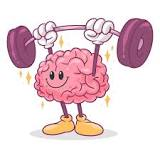
Every time you study, the brain is reinforcing existing connections and making new ones. The basis of this are neurons, the individual cells that make up the brain. This process of creating and strengthening connections is called synaptic plasticity. What we are trying to stress here, is that learning isn’t purely mental; it is biological and physical change to your neural pathways. The more you review, recall or practice information, the synapses between neurons become stronger and faster. The more these pathways are activated the easier this information becomes to recall.
Understanding the biological side of studying helps explain why certain methods work better than others. This webpage will briefly breakdown the core systems involved in learning so you can study in a way that aligns with how your brain actually works.
How Does Our Brain Learn?
When you study, information is moving through three key stages of memory, with each serving a different role in learning.
- Sensory Memory: Sensory memory is the initial step for new information. Sensory information is everything you see, hear, smell or feel, however most of this information disappears almost instantly. The factor that determines what passes sensory memory and what fades is attention. When our focus is directed that information moves forward into working memory. Without attention, sensory inputs never enter the learning pathway and are lost just as quickly as they appear.
- Working Memory: You can think about the brain’s working memory as its workspace. This type of memory involves your brain actively holding and processing information. Practically, our working memory is active when we are solving a problem, taking notes, or trying to understand a new concept. However, working memory has a major limitation; it has a limited capacity. Because of this limitation, your working memory becomes over burdened easily. This is the reason why long lectures, dense notes and multitasking seem to make learning harder. Becoming good at studying involves using our working memory effectively. To do this information needs to be broken into smaller chunks, organized clearly, and connected to what you already know. Our working memory, when well managed, is the neural bridge that allows this information to move into long-term memory.
- Long-Term Memory: Long-term memory is where information becomes stable, lasting and readily available. Unlike working memory, it has no known limit to what we can store. Once stored, the brain strengthens these neural connections every time this information is revisited. In short, this process of strengthening our synapses is called long-term potentiation. LTP allows for faster and more accurate recall. On the other hand, LTP is not permanent. Without reinforcement connections weaken over time, making strategies that utilise active recall essential for keeping information accessible.
Did You Know? Long-term memory strengthens when you struggle to remember something. This effort (called retrieval practice) creates stronger neural connections than simply re-reading notes. This means testing yourself is one of the most effective learning strategies!
Why Does This Matter for Studying?
Understanding how information travels through sensory, working and long-term memory explains why certain studying strategies are more effective than others. Studying is not purely about the sheer time spent; it is about working with your brain’s systems rather than against it.
What Does This Mean for My Study Habits?
- Attention is Highly Essential: Because sensory memory lasts for a brief period, reducing distractions helps information reach our working memory.
- Don’t Overload Your Working Memory: since it has a limited capacity breaking content into smaller chunks makes learning easier as you are preventing mental fatigue.
- Long-Term Memory Strengthens Through Repetition: Strategies involving active recall and spaced repetition takes advantage of how the brain consolidates its stored information. These strategies are the neuroscience behind “practice makes perfect”.
- Understanding is Connection Building: The more you deeply engage with ideas, the stronger your neural pathways become.
Our Tip, Rest→Sleep→Consolidation
One of the most overlooked parts of studying is what happens after you close the books. After unwinding and especially during sleep, your brain strengthens the connections formed while you were learning. This process of moving working memory to long-term storage is known as memory consolidation.
Even short breaks during study sessions can help reset your attention and reduce overload, however sleep is where we make our largest gains. While asleep, the brain revises and reorganizes information, making it easier to recall in the future. In other words, if encoded information is not consolidated…you simply will not remember it (Conte et al., 2025).ion and reduce overload, however sleep is where we make our largest gains. While asleep, the brain revises and reorganizes information, making it easier to recall in the future. In other words, if encoded information is not consolidated…you simply will not remember it (Conte et al., 2025).